Types of Psychedelic Mushrooms For Sale In Califronia: A Comprehensive Guide to Well-Known Psilocybin Species

Types of psychedelic mushrooms. Psychedelic mushrooms have attracted scientific, cultural, and historical interest for centuries. These fungi contain naturally occurring compounds such as psilocybin and psilocin, which have been the subject of growing research in neuroscience, psychology, and ethnobotany. While hundreds of mushroom species exist worldwide, only a relatively small number are known to contain psilocybin.

Each species has its own appearance, natural habitat, and geographic distribution. Some are widespread and commonly discussed in scientific literature, while others are rare and found only in specific regions. Understanding the differences between these species provides valuable insight into fungal diversity and ongoing research surrounding psychedelic mushrooms.

What Are Psychedelic Mushrooms?

Psychedelic mushrooms are fungi that naturally produce psilocybin, a compound that converts into psilocin after it is metabolized. Psilocin interacts with serotonin receptors in the brain, making these mushrooms a focus of research into consciousness, perception, and mental health.

Scientists have identified more than 200 mushroom species that contain psilocybin or related compounds. Most belong to the genus Psilocybe, although several other genera also include psychoactive species.

1. Psilocybe cubensis

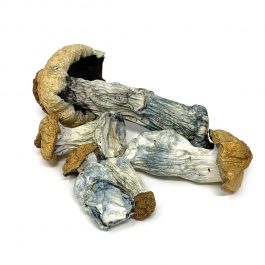
Psilocybe cubensis is the most widely recognized psilocybin-containing mushroom. It grows naturally in warm, humid environments and has been documented in tropical and subtropical regions across multiple continents.

Typical characteristics include:

  • Golden to caramel-colored cap
  • Pale stem with a ring
  • Blue bruising when handled
  • Dark purple-brown spores

Because it is one of the best-known species, P. cubensis appears frequently in scientific publications, identification guides, and educational resources.

2. Psilocybe semilanceata (Liberty Cap)

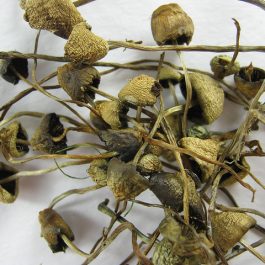
Often called the Liberty Cap, Psilocybe semilanceata is one of the most widely distributed wild psilocybin species.

It is recognized by:

  • A pointed, bell-shaped cap
  • Thin, flexible stem
  • Small overall size
  • Growth in grassy meadows and pastureland

Unlike many other species, Liberty Caps generally grow in grasslands rather than directly on wood or animal waste.

3. Psilocybe azurescens

Psilocybe azurescens is known for its distinctive appearance and coastal habitat.

Key features include:

  • Broad caramel-colored cap
  • Thick white stem
  • Strong blue bruising
  • Preference for wood debris and sandy coastal environments

This species has been documented primarily in the Pacific Northwest of the United States.

4. Psilocybe cyanescens (Wavy Cap)

The Wavy Cap is named after the mature cap’s irregular edges.

Characteristics include:

  • Wavy cap margin
  • Chestnut-brown coloration
  • White stem
  • Blue bruising
  • Growth on wood chips and mulch

It commonly appears in landscaped gardens, parks, and forested areas where wood mulch is present.

5. Psilocybe mexicana

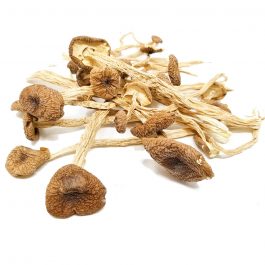
Psilocybe mexicana holds an important place in history because it has been associated with traditional ceremonial use in parts of Mexico.

It is generally:

  • Small and delicate
  • Light brown to tan
  • Found in subtropical grasslands
  • Associated with high-altitude environments

This species contributed significantly to early scientific interest in psilocybin during the twentieth century.

6. Psilocybe tampanensis

This species is notable because it can produce underground hardened fungal structures known as sclerotia.

Typical features include:

  • Small brown cap
  • Slender stem
  • Grassland habitat
  • Formation of compact underground structures under suitable conditions

Researchers have studied this species because of its unique biological characteristics.

7. Psilocybe caerulescens

Sometimes referred to as the “Landslide Mushroom,” this species often appears after soil disturbance.

It commonly grows:

  • Along trails
  • On disturbed ground
  • In humid forests
  • During rainy seasons

The blue staining that develops after bruising is one of its distinguishing features.

8. Psilocybe baeocystis

Psilocybe baeocystis is native to parts of North America.

Identification features include:

  • Dark brown cap
  • Thick stem
  • Blue bruising
  • Preference for woody debris

Although less common than some other species, it remains well documented in mycological literature.

9. Psilocybe ovoideocystidiata

This species has gained attention because of its expanding documented range.

It is typically found:

  • Near rivers
  • Along floodplains
  • On wood debris
  • In moist woodland habitats

Its scientific name reflects the distinctive shape of microscopic spores.

10. Psilocybe allenii

Named after mycologist John Allen, Psilocybe allenii is primarily found along the western coast of North America.

Common traits include:

  • Brown cap
  • White stem
  • Blue bruising
  • Preference for wood chips and mulch

It is often compared with other wood-loving species due to its similar habitat.

Other Psilocybin-Containing Genera – Types of psychedelic mushrooms

Although Psilocybe includes the majority of well-known psychedelic mushrooms, other genera also contain species that produce psilocybin.

Examples include:

  • Panaeolus
  • Gymnopilus
  • Pluteus
  • Inocybe (certain species)
  • Conocybe (certain species)

These genera differ considerably in appearance, ecology, and geographic distribution.

Geographic Distribution

Psilocybin-containing mushrooms occur across many regions of the world.

They have been documented in:

  • North America
  • South America
  • Central America
  • Europe
  • Asia
  • Africa
  • Australia and New Zealand

Different species have adapted to a variety of habitats, including forests, grasslands, coastal dunes, mountain regions, and woodlands.

Common Characteristics

Many psilocybin-containing mushrooms share several observable features, although none of these characteristics alone can confirm identification.

Common characteristics include:

  • Brown or tan caps
  • Purple-brown spore prints
  • White to cream-colored stems
  • Blue bruising after damage in many species
  • Growth during wet seasons

Because many poisonous mushrooms resemble psilocybin species, visual identification alone can be unreliable.

Ecological Importance – Types of psychedelic mushrooms

Like many fungi, psilocybin-containing mushrooms contribute to healthy ecosystems.

They help:

  • Break down dead organic material
  • Recycle nutrients
  • Support soil health
  • Participate in forest nutrient cycles
  • Interact with microorganisms and plants

These ecological roles are important regardless of whether a species contains psychoactive compounds.

Scientific Interest

Modern scientific research has increased interest in psilocybin because of its effects on the brain and its potential role in carefully controlled clinical studies. Researchers continue to investigate how psilocybin affects perception, cognition, and neural activity, while emphasizing rigorous safety standards and regulatory oversight.

The growing body of research has encouraged additional studies in neuroscience, psychiatry, pharmacology, and fungal biology. Although findings remain an active area of investigation, they have contributed to renewed interest in understanding both the chemistry and biology of these unique fungi.

Why Species Identification Matters

Accurate species identification is essential in mycology. Numerous non-psychoactive and toxic mushrooms resemble psilocybin-containing species, making identification based solely on appearance difficult. Professional mycologists often rely on a combination of habitat observations, microscopic examination, spore characteristics, and taxonomic references to distinguish closely related species.

Learning about species diversity helps people appreciate fungal biodiversity while highlighting the importance of scientific classification and careful observation.

How Do Psychedelic Mushrooms Function in Your System?

Psychedelic mushrooms contain naturally occurring compounds called psilocybin and psilocin. These compounds have been studied for decades because of the way they interact with the brain and nervous system. Researchers continue to investigate their effects on perception, cognition, and brain activity in carefully controlled settings.

From Ingestion to the Brain

After psilocybin is consumed, the digestive system absorbs it into the bloodstream. The body then converts most of the psilocybin into psilocin, the compound primarily responsible for its psychoactive effects.

Psilocin travels through the bloodstream and crosses the blood-brain barrier, allowing it to interact with specific receptors in the brain.

Interaction with Serotonin Receptors

Psilocin has a chemical structure similar to serotonin, a neurotransmitter involved in regulating mood, sleep, learning, memory, and perception.

Because of this similarity, psilocin can bind to several serotonin receptors, particularly the 5-HT2A receptor. Scientists believe this interaction plays a major role in the changes in perception, thought processes, and sensory experiences associated with psilocybin.

Effects on Brain Communication

Research suggests that psilocin temporarily changes how different regions of the brain communicate with one another. Some networks become less synchronized, while communication between areas that do not normally exchange as much information may increase.

Scientists continue to study these changes to better understand how the brain processes information and adapts to new patterns of activity.

Processing and Elimination – Types of psychedelic mushrooms

After it has circulated through the body, psilocin is broken down primarily by the liver. The resulting metabolites are then eliminated through the kidneys and excreted in urine.

Most of the compound leaves the body within about 24 hours, although this can vary between individuals. The subjective effects generally last several hours, while the body continues to metabolize and eliminate the remaining compounds.

Factors That Influence Its Effects

Several factors can influence how psilocybin affects a person, including:

  • Individual biology and metabolism
  • Body weight and general health
  • The amount of psilocybin present
  • Food consumed before ingestion
  • Current medications
  • The person’s mindset and surroundings

Because these factors vary, experiences and physiological responses can differ significantly from one individual to another.

Other Factors to Consider When Taking Mushrooms

It’s essential to understand how other factors, aside from the type of mushrooms, can impact the safety and quality of a trip. Potency (the percentage of psilocybin in the mushroom relative to its weight), the growing conditions, set, setting, and the legality.

Do Different Species Feel Different?

Not really. All psilocybin mushrooms elicit the same core effects: Altered perception and visuals, emotional shifts, an altered sense of time, and the ability to look inward. Some people say specific species can feel more “visual” or “body heavy”—anecdotal claims that are hard to verify scientifically.

In addition to psilocybin/psilocybin, there are a range of other compounds found in these fungi. These include tryptamines such as baeocystin, norbaeocystin, norpsilocin and aeruginascin, a number of beta-carbolines (in trace amounts) and a range of terpenes. While the jury is still out on the possible modulating influence of these other secondary compounds in these fungi, our understanding of the pharmacology of these compounds is limited.

If a specific species feels different to you over another, it’s probably due to the dosage, any additional compounds, and your set and setting, which is clinical speak for your mental state and physical setting going into the experience. Your set and setting play a significant role in the overall experience you have.

This being said, it is worth noting that experienced psilonauts and cultivators who have sampled a range of different mushroom species very often tend to hold certain species in higher esteem than the more commonly cultivated and consumed P. cubensis. While many have the view that “a cube is a cube”, when applied to the purported and possibly overhyped differences in effect attributed to the many different strains of P. cubensis, some feel things become more interesting when considering differences between distinct species of mushroom. Some will feel strongly enough about their preference for other species that they will forego ever growing and consuming P. cubensis mushrooms again having sampled what they perceive as superior species, considering them as “cube killers”.

For example, Richard Gutierrez, who played a key role in developing the popular “Penis Envy” strain of P. cubensis, notably does not like to partake of this mushroom himself, not having done so since the 1970s. In an interview with Hamilton Morris, he said that “it’s never been my mushroom of choice; I’ve always eaten [Psilocybe] cyanescens.”

Psychedelic mushrooms Duration – Types of psychedelic mushrooms

Most psilocybin mushroom experiences last 4 to 6 hours, with the trip peaking at the one-and-a-half to two-hour mark. After effects may linger for several hours. Duration is generally similar across species, though high-potency species may feel more intense, and may extend the duration.

How to Use Mushrooms Responsibly

Set and Setting

As mentioned above, there are other factors aside from the species that significantly impact your trip experience. Set refers to your mindset, expectations, personality structure, mood and emotional state, mental and physical health, past experiences, and intent for the session. Setting is the physical, social and cultural environment.

Research consistently shows that set and setting are crucial to having a positive experience, implying that adverse outcomes correlate more strongly with poor set and setting than with dose or species. A moderate dose in a comfortable, supported environment produces vastly different outcomes than the same dose in a chaotic setting.

Also, it’s crucial to undergo medical screening before taking psilocybin, as it can be contraindicated for people with certain cardiovascular conditions, those taking specific medications, or individuals with personal or family histories of psychotic disorders. Any legitimate retreat, like Beckley Retreats, will bake this into its onboarding process, before allowing you to embark on a ceremony.

Integration and Post-Experience Care

The experience itself is only part of the picture. Integration is the process of making sense of insights and incorporating them into daily life, which often determines long-term benefits. This might involve journaling, therapy, discussion with trusted friends, or participation in integration circles.

Modern therapeutic approaches combine psilocybin sessions with extensive preparation and integration support, recognizing that the medicine catalyzes change but doesn’t create lasting transformation alone.

Ongoing Scientific Research

In recent years, researchers have expanded studies into psilocybin’s effects on brain function. Clinical research is exploring its potential therapeutic applications under carefully controlled medical conditions, while also evaluating safety, appropriate screening, and possible risks. These investigations are still ongoing, and treatments involving psilocybin are subject to regulatory approval and clinical oversight where permitted.

Buy Psychedelic mushrooms For Sale Online In The USA

Psychedelic mushrooms function in the body because psilocybin is converted into psilocin, which interacts with serotonin receptors in the brain. This interaction temporarily alters patterns of brain communication and information processing. Afterward, the body metabolizes and eliminates the compound through normal biological processes. Although research into psilocybin continues to grow, scientists emphasize the importance of carefully controlled studies to better understand both its effects and its potential risks. Check about USA Decision on Magic Mushrooms For Sale

Conclusion

Psychedelic mushrooms represent a fascinating group of fungi with remarkable biological diversity. From the widely recognized Psilocybe cubensis and Liberty Cap to coastal species such as Psilocybe azurescens and wood-loving mushrooms like Psilocybe cyanescens, each species has unique characteristics shaped by evolution and environment.

As scientific understanding continues to grow, these mushrooms remain an important subject in mycology, ecology, neuroscience, and ethnobotany. Studying their habitats, taxonomy, and natural history offers valuable insight into the complexity of the fungal kingdom and the role these organisms play in ecosystems around the world.

Whether viewed through the lens of biology, conservation, or scientific research, the many types of psychedelic mushrooms demonstrate the extraordinary diversity found within the natural world.